Contents of this page:
The situation
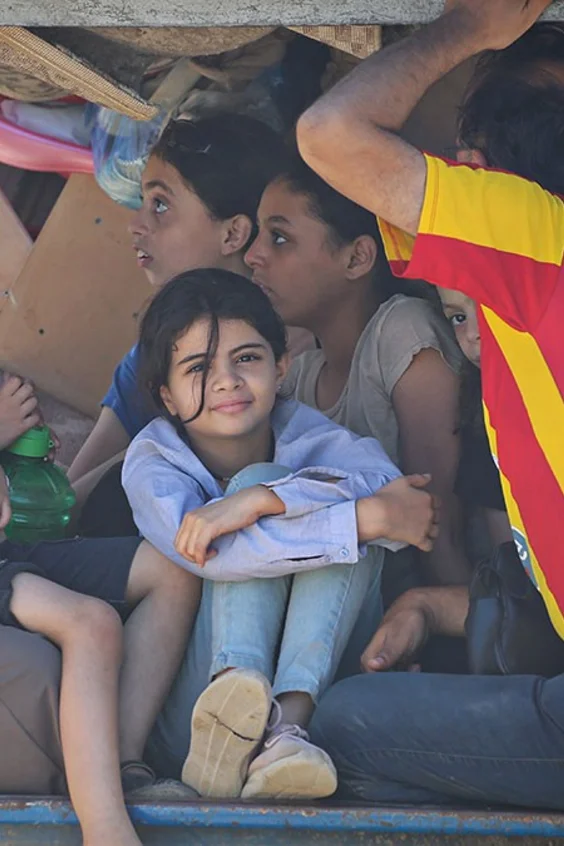
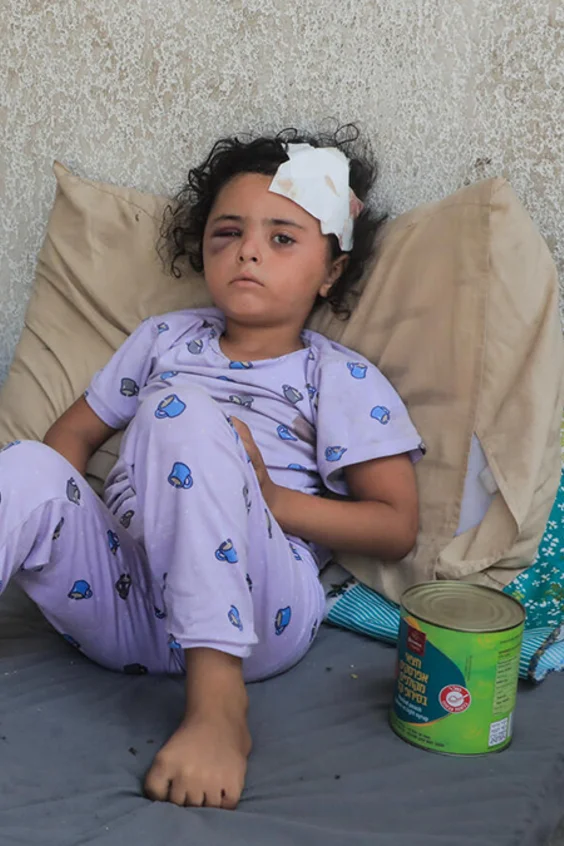
The devastating terror attacks on Israel by Hamas on October 7, 2023, were followed by two years of war and suffering. The children, who bear no responsibility, have paid the highest price for the ongoing violence. Since the beginning of the war in Gaza, at least 64,000 children have been killed or gravely injured. In addition, parts of the Gaza Strip are experiencing famine. Throughout Palestine, some 3.3 million people – including 1.7 million children – are in urgent need of humanitarian assistance.
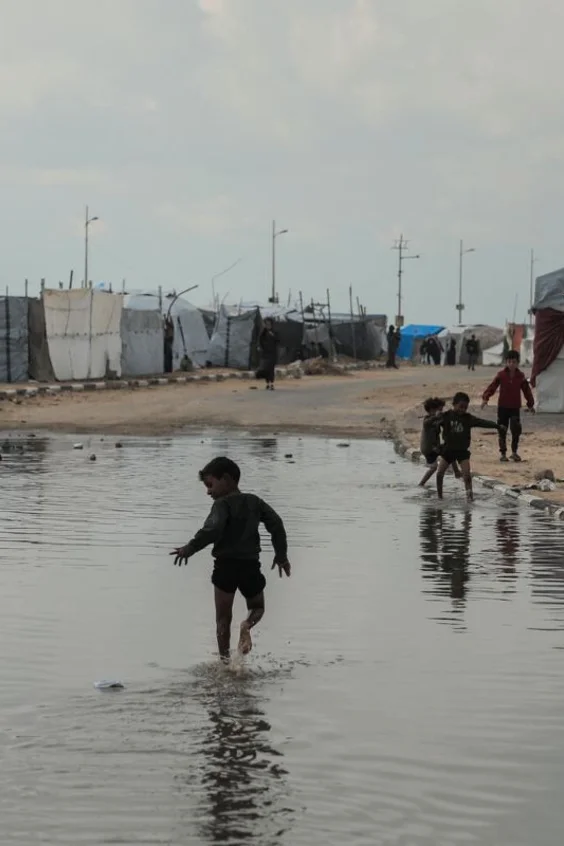
Although the ceasefire agreement has raised hopes, the situation in the Gaza Strip remains dire: access to essential services is still severely limited for the population. Many homes, hospitals and schools lie in ruins. Food, clean water and medical care remain in critically short supply.
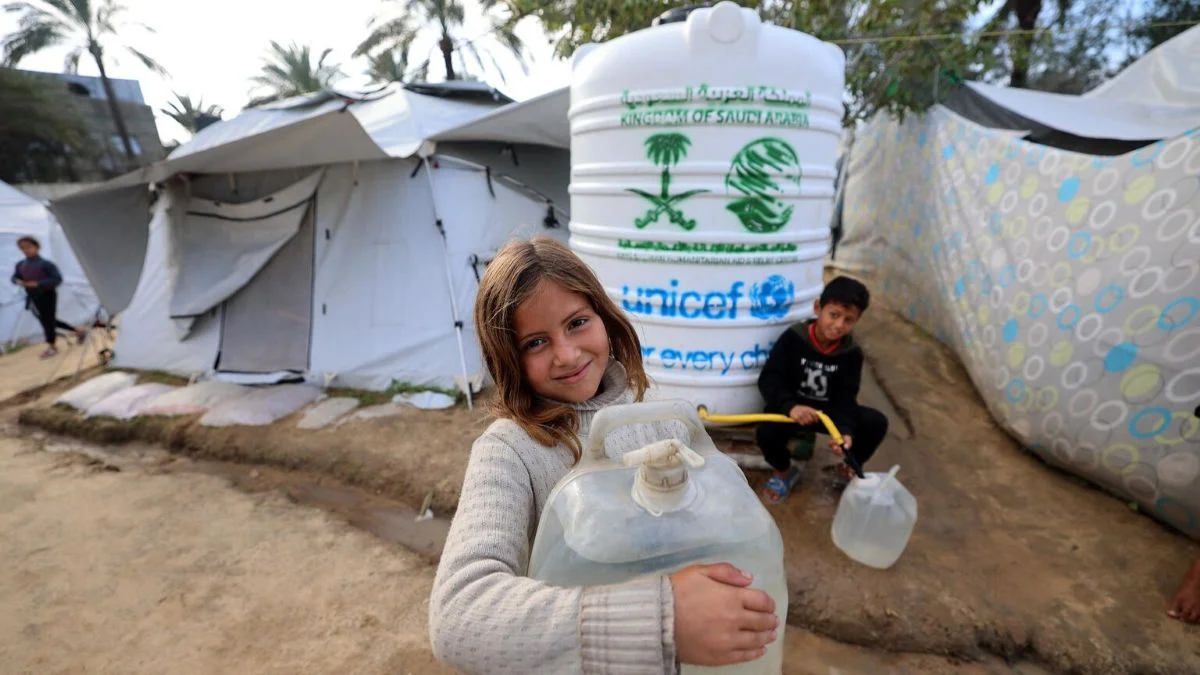
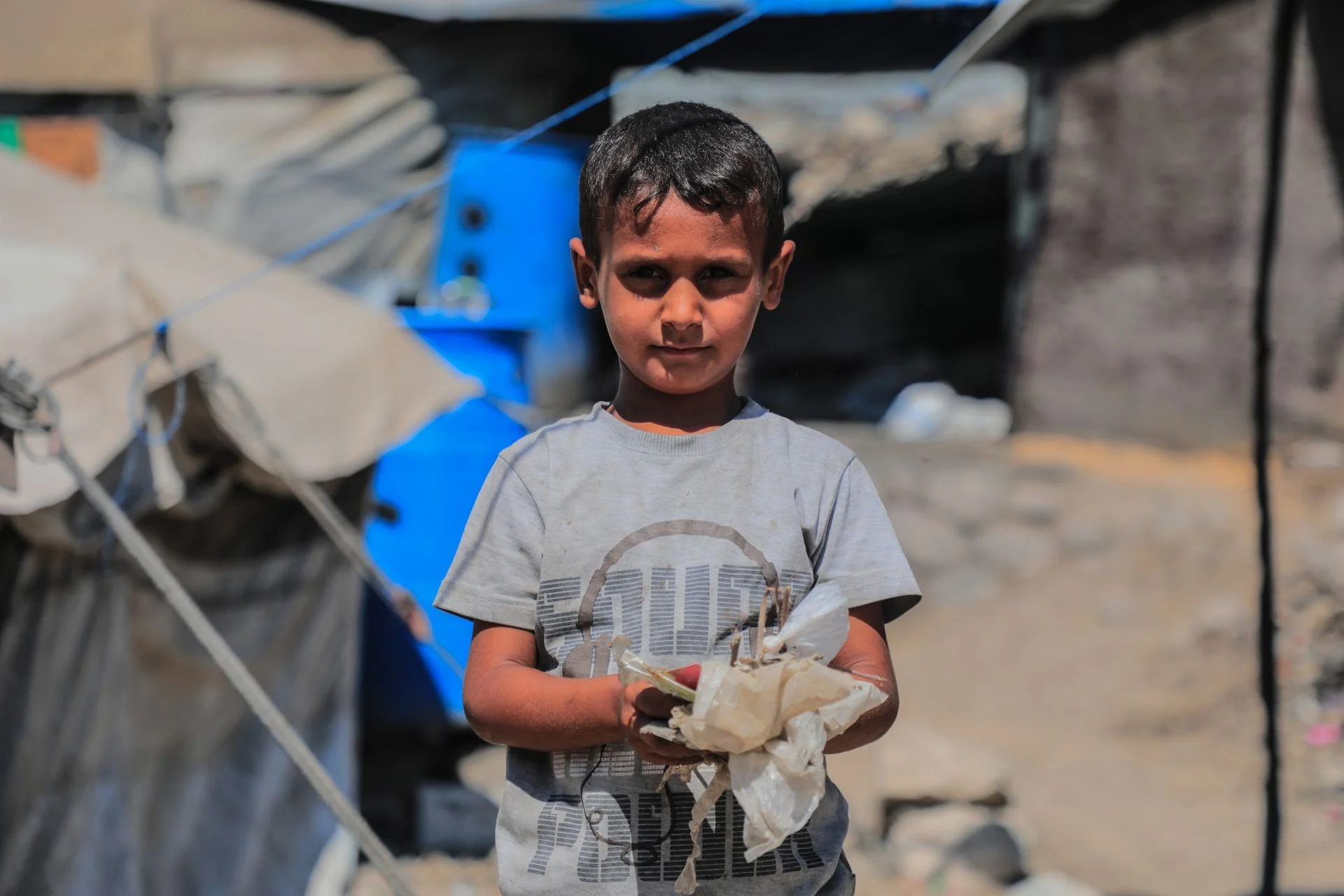
To bring water closer to families, UNICEF is installing water tanks in refugee camps. Fatima feels relieved: at last, she can drink fresh water without worry.
How your donation helps
UNICEF was present in the Gaza Strip before and throughout the war – and continues to stand by the people there. We are doing everything we can to reach children and their families and provide life-saving humanitarian assistance.


UNICEF calls on the warring parties to find a lasting political solution which focuses on the rights and welfare of current and future generations of children.
FAQs about the war in Gaza
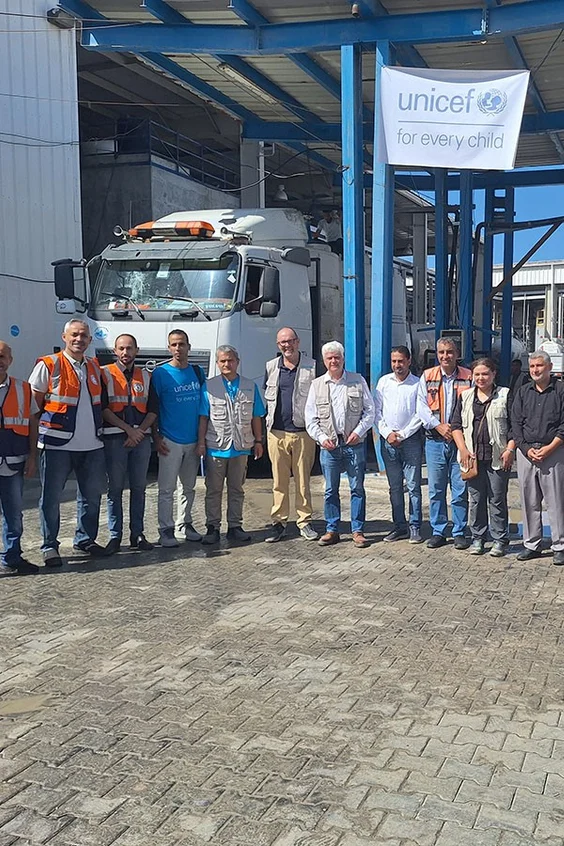
UNICEF procures emergency supplies such as safe water, vaccines, medical supplies, sanitation kits and ready-to-use therapeutic food for malnourished children. UNICEF also delivers generators, fuel, mobile toilets, tarpaulins, tents, clothing and blankets. These are taken to Gaza by truck where they are distributed.
During the 42-day ceasefire, UNICEF managed to take and store around 40,000 tonnes of emergency supplies to the Gaza Strip. These supplies were almost completely exhausted during the 11-week blockade when no further humanitarian aid could be delivered. Limited emergency supplies are now being authorized entry to Gaza again.
The donations are also used for humanitarian cash transfers, to pay the salaries of the employees in Gaza and to finance local programs. It is absolutely essential to maintain these lifesaving services,
including identifying and treating malnourished children at an early stage, securing the supply of safe water using desalination plants and providing psychosocial support to traumatized children.
UNICEF remains present in the Gaza Strip – with national and international staff who work tirelessly to support children and families in dire need. Together with partner organizations we provide assistance in extremely difficult conditions.
In spite of the current limited access we make use of every available time window and every opportunity to take lifesaving supplies to Gaza, while at the same time preparing comprehensive relief measures that can be activated immediately once access improves.
Malnutrition cannot be overcome solely by delivering food: children who are starving often do not die of hunger itself, but from simple infections or diseases that their weakened immune system can no longer fight – because they do not have access to medical care, safe drinking water, adequate sanitary facilities and a safe environment. The survival of these children can only be ensured through a coordinated, cross-sectoral approach providing access to food, healthcare, water and sanitation measures (WASH).
Your donation helps directly: it enables our staff to be deployed, supports local collaboration, warehousing, logistics – and makes sure that vital aid will be available as soon as we can bring it to the children.
UNICEF has been condemning the awful attacks on Israel and the consequences for children and their families since October 7, 2023. Every child must be protected against violence. UNICEF demands that all hostages still held in Gaza immediately be freed unconditionally and returned to their families. The children in the region need a permanent ceasefire. Access to humanitarian aid must also be ensured on a permanent basis.
UNICEF has been active in Israel since 2009 as one of 33 UNICEF national committees worldwide. The Israeli National Committee recruits support for UNICEF's worldwide programs and works to promote and raise awareness of child rights.
UNICEF is not actively engaged in program work in Israel at the moment. Higher-income countries such as Israel can usually provide adequate care themselves to the children in their country. This is why UNICEF is not calling for donations for children living in Israel. UNICEF is engaged in dialog with the competent authorities in Israel in order to identify what support UNICEF can provide in the face of the far-reaching consequences of the brutal attacks on October 7, 2023.