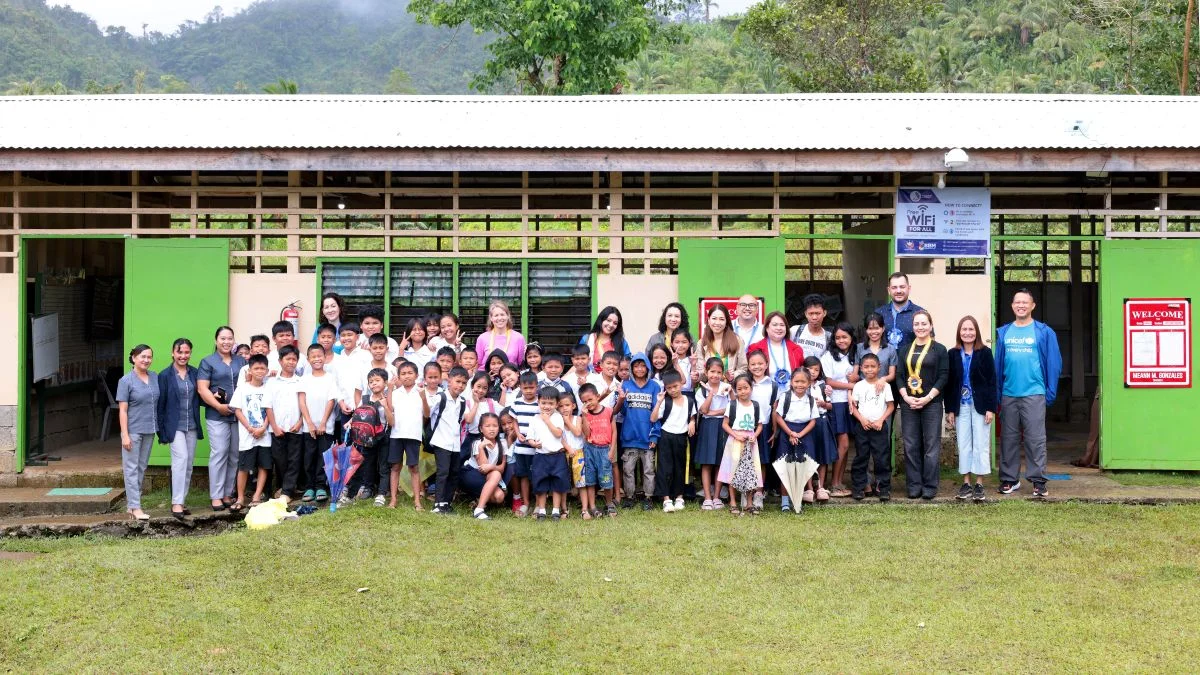
In the first week of February 2026, UNICEF welcomed a delegation of Roche Ambassadors for a project visit to remote multigrade schools in Southern Leyte, Philippines. The visit offered a chance to see first-hand how a long-standing partnership between the Roche Employee Action and Charity Trust (Re&Act) and UNICEF supports education for children in some of the country’s most remote communities.
For more than two decades, Roche employees around the world have raised funds for children in vulnerable situations through the Roche Children’s Walk, the company’s largest employee engagement and fundraising intiative. Every year, selected employees take on an additional role as Children’s Walk Ambassadors, helping to mobilise colleagues and lead fundraising activities in their countries. Through Re&Act, these efforts support programmes implemented with partners such as UNICEF – including education initiatives in the Philippines. The visit offered the Roche Ambassadors the opportunity to see one of these programmes on the ground. It also helped connect the collective efforts of thousands of Roche employees around the world with the children and communities that those efforts ultimately support.
One place where this support is making a difference is in multigrade schools in Southern Leyte. In multigrade schools, one teacher teaches several grade levels in the same classroom. This approach has long been part of the Philippine education system and helps ensure that children living in geographically isolated communities can still access education. Today, around half a million children across the Philippines learn in around 8’500 multigrade schools. Without these schools, many children would have to travel long distances every day, something that is often impossible due to geography, cost or safety concerns.
The journey to Southern Leyte
Our journey began with a flight from Manila to Tacloban, the capital of the province of Leyte. As we stepped off the plane, heavy rain was already pouring down. Airport staff greeted all passengers with large umbrellas so we could make our way – at least somewhat dry – into the terminal. Even though the visit had been carefully planned to avoid the typhoon season, the rain was relentless, a reminder of how unpredictable weather patterns in the region have become.
From Tacloban, we continued by car for nearly five hours, travelling deeper into Southern Leyte. From the coast, we travelled inland before crossing the island towards the opposite coast, following steep and winding roads that crossed newly built and recently renovated bridges. The road led us through lush hills filled with dense tropical vegetation. With every kilometer, the landscape grew quieter and more remote. The rain kept falling, and along the way we could see how quickly the streets and pathways filled with water. In some places, small homes (many of them simple tin-roofed houses) were already surrounded and flooded by rising water. Located close to the sea, communities like these are particularly vulnerable. Even a passing storm offers a glimpse of the impact that stronger typhoons or storm surges can have. After the long drive, we finally arrived in Maasin City, which would be our base for the following days.
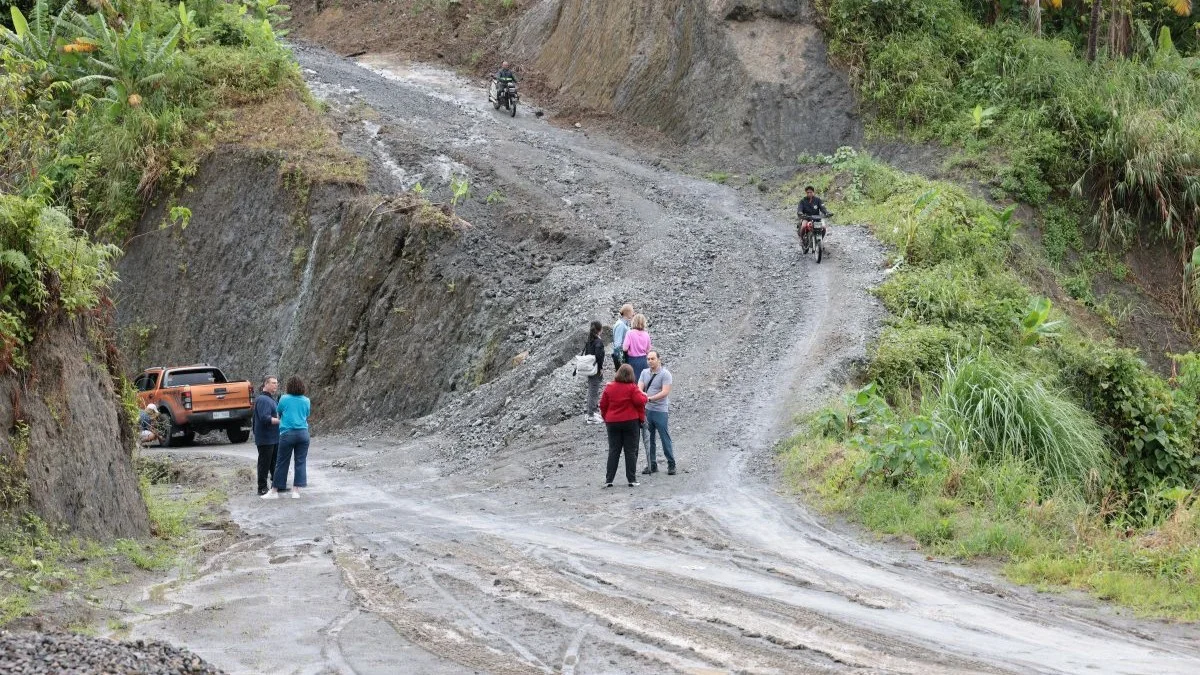
The following morning, we continued the journey to two of the remote multigrade schools supported by the partnership between Roche Re&Act and UNICEF. After another two-hour drive along narrow roads, we finally reached the small path leading up to the school. But despite hiring four-wheel-drive vehicles for the trip, the cars couldn’t go any further. The dirt road had turned into thick mud after days of rain and was impossible to pass. So, we left the cars behind and continued the last stretch on foot, walking up the hill for twenty-five minutes, until the school finally came into view.
At UNICEF, a simple phrase guides our work: reaching every child. On this journey, we experienced what the “last mile” can look like in remote communities like these.
Strengthening multigrade schools
Multigrade schools like the one we visited often face significant challenges. Learning materials specifically designed for multigrade teaching are limited, and many teachers don’t have opportunities for specialized training. The long school closures during the COVID-19 pandemic further widened learning gaps, particularly for children in rural communities who were already disadvantaged. In some of these schools, classes were suspended for almost two and a half years. In places where digital learning had not yet been introduced, this meant children effectively missed more than two years of schooling – an interruption with profound consequences for their learning and development.
Together with the Philippine Department of Education, UNICEF is working to strengthen multigrade education through the use of digital technology. The project provides digital learning materials, training for teachers on how to integrate technology into their teaching, and support for school leaders to guide and monitor digital learning in their schools. It also engages parents and communities, helping them support safe digital learning at home.
Currently piloted in two regions – Eastern Visayas and Caraga – the initiative aims to develop a model that the Department of Education can eventually scale up nationwide, helping ensure that children in even the most remote communities have access to quality education. Ultimately, initiatives like this help ensure that where a child lives does not determine their chance to learn.
Inside the classroom
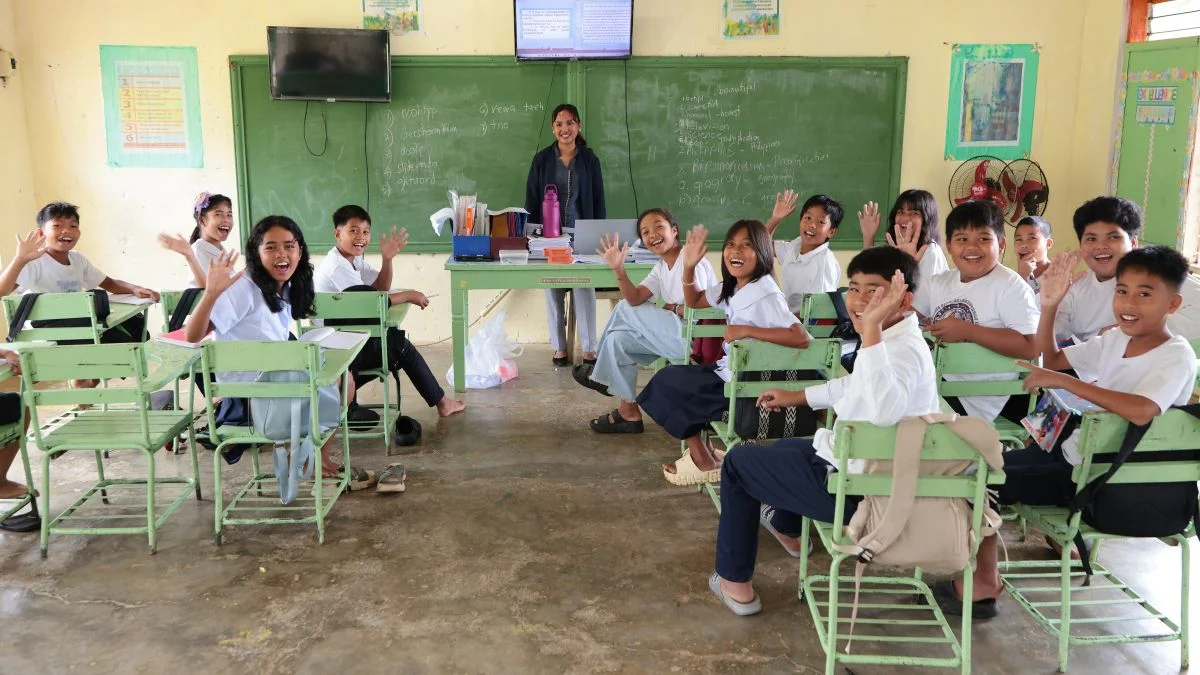
At Kauswagan Primary School and Santa Maria Primary School, the classrooms were filled with focus and quiet concentration. Children in their school uniforms sat at small desks, some carefully writing in their notebooks, others working together in small groups. Outside the open windows, green hills stretched into the distance, while inside the classroom the focus was firmly on learning.
In multigrade classrooms like these, one teacher guides students from several grade levels at the same time. While one group of children works independently on an activity, another group listens to instructions at the front of the room. It requires constant engagement, careful timing and immense focus from the teacher to ensure that every child receives the attention they need.
Watching a lesson made it clear how demanding this role is. Teachers move constantly between groups, switching from one grade level to another, guiding discussions, checking exercises and encouraging students along the way. Coordinating group work, explaining different topics and managing multiple learning levels at once is no small task.
Digital tools are helping to support this complex learning environment. In the classrooms we visited, teachers used laptops to guide lessons while students alternated between tablets and traditional pen-and-paper exercises. This combination allows children to work independently and at their own pace, while giving teachers the flexibility to move between groups and support students where they need it most. Across the programme, this approach is being introduced in around 100 schools, reaching approximately 5,000 students and 300 teachers.
What stood out most, however, was the dedication of the teachers. Many have to travel long distances to reach these remote schools and stay there during the week, returning to their families only on weekends. In some cases, teachers even sleep in the classrooms themselves. Their commitment reflects a deep belief in the importance of education and in the potential of every child sitting in front of them. It is this dedication – combined with the support of programmes like the one led by UNICEF and the Department of Education – that helps ensure that children in even the most remote communities have the opportunity to learn and thrive.
Why reaching every child matters
In communities such as those in Southern Leyte, education can open doors to opportunities that reach far beyond the classroom. It equips young people with the knowledge, skills and confidence to build their future and contribute to their communities. Strengthening multigrade schools plays a critical role in making this possible in the Philippines.
Our visit to Southern Leyte was a reminder that reaching every child often requires going the extra mile, sometimes quite literally. Yet in classrooms like these, the dedication of teachers and the curiosity of children show that the effort is always worthwhile. In schools like the one we reached at the end of a muddy hillside path that morning, these efforts help ensure that every child – no matter how remote their community – has the chance to learn.