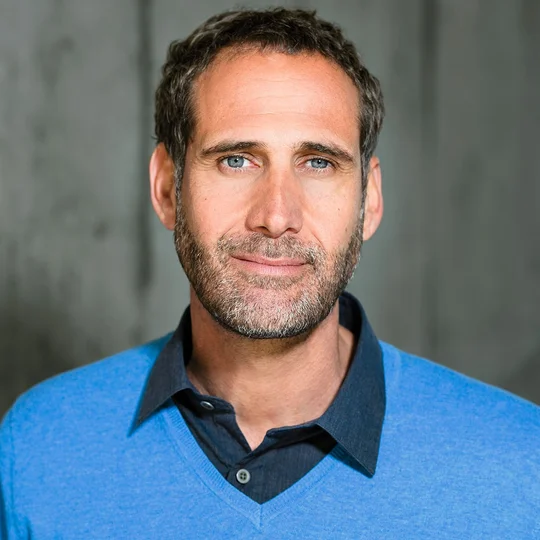
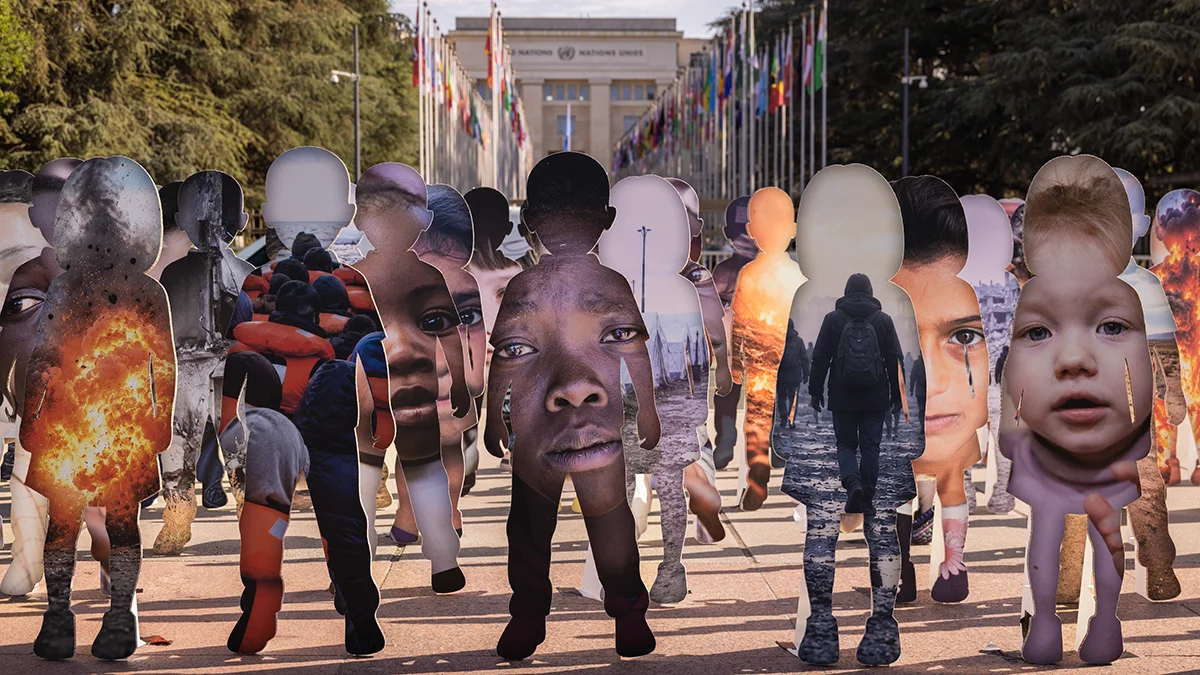
The latest figures show that 45.3 million of the world’s children are displaced by conflict and violence. At the same time, international aid funding has collapsed, jeopardizing the protection of the most vulnerable. To mark World Refugee Day, UNICEF Switzerland and Liechtenstein is bringing attention to the plight of refugees with an installation featuring 45 child figures in front of the Palais des Nations in Geneva.
Millions of people have been forced to leave their homes because of war, violence and crisis. The slight decline in the number of displaced people to 117.8 million in 2025 (the first decline in a decade) was due to 14.7 million people returning to their homes. However, coming home has not meant a return to safety. Many families face critical challenges, arriving to find continued fighting, ongoing uncertainty and destroyed infrastructure.
Children are among the most vulnerable in such situations. 45.3 million children were displaced in 2025. These children are more likely to be victims of violence, exploitation, human trafficking and child labor. They are more likely to lose access to education and healthcare. Those that haven’t returned must endure longer waits before they can go home: on average, children who are displaced before their fifth birthday will spend their entire childhoods in exile. UNICEF Switzerland and Liechtenstein therefore strongly warns against reading any slight decline in numbers as an easing of the humanitarian crises.
The installation in front of the Palais des Nations in Geneva – the heart of the international community – highlights the plight of millions of displaced children. The 45 figures represent children who no longer have protection, education or prospects.
The abrupt cuts to aid funding have worsened conflicts – and children are the first to suffer
In mid-May, Science magazine published a study by Dominic Rohner, Professor of Economics at the University of Lausanne, which shows that the sudden discontinuation of international funding triggered a rise in conflicts and instability. In African regions that were particularly reliant on funding, this discontinuation led to a 10.6 percent rise in the number of conflict incidents as well as a 9.3 percent rise in the number of combat-related deaths. In its latest annual report, UNICEF warns that drastic cuts in international aid are already jeopardizing the support on which millions of children in crisis and conflict zones depend.
«Behind every number is a child with hopes, dreams and rights. Regardless of whether they are fleeing, living as an internally displaced person or in a safe country, children need protection, education and hope for the future. The fact that millions of children are growing up under such conditions should never be seen as normal,» says Bettina Junker, Executive Director of UNICEF Switzerland and Liechtenstein.
The impacts from war and violence fall mostly on children
From «45 Displacement Facts»
- In 2025, more than one in five of the world’s children lived within 50 km of an armed conflict zone.
- About one million people have returned to Afghanistan, mostly due to pressure from Pakistan. 80 percent of returnees were women and children.
- More than 15 million people in Sudan have been displaced since the outbreak of the war in April 2023 – the largest displacement crisis in the world.
- Around 40 percent of the asylum seekers in Switzerland are children and adolescents.
These numbers show that arrival in a safe country is not the end of a refugee’s journey. Displaced children still need protection, stability and prospects for their future. That includes spaces for families to have privacy, immediate access to education, opportunities for age-appropriate recreation and play, and adequate medical and psychological care. UNICEF Switzerland and Liechtenstein advocates for minimum child protection standards in asylum shelters. Because children need protection before, during and after fleeing from violence.
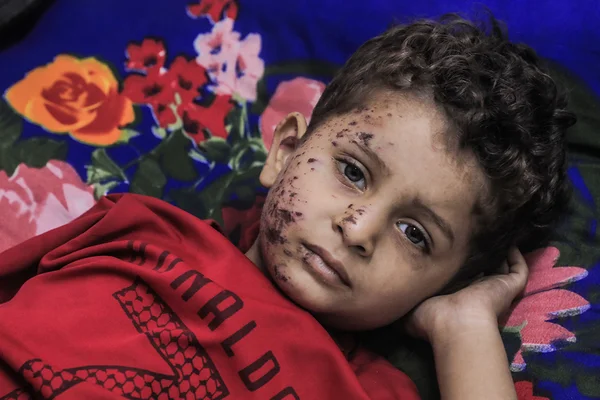
Gaza City, September 2025. In the middle of the night, the shelter where Nour (10) and Yehya (3) live with their family is directly hit.
Their mother Rabab is awakened by the explosion. Seconds later, debris collapses onto the family. From beneath the rubble she hears her daughter screaming: «Mum, Mum, get me out from under the rubble!»
Her son Yehya also survives with injuries. But for her eldest son Moaz (14), help comes too late. He is killed in the attack.
The family flees. Only in the light of burning tents does Rabab realise the extent of her children’s injuries. Nour’s legs are severely damaged and Yehya has a leg injury. Both are taken to hospital.
Before the operation, the doctors tell Rabab only one thing: «Pray for Nour.» Her greatest fear becomes reality. The ten-year-old loses both legs and her right hand.
Just one day earlier, Nour had been playing with her friends. When she learns what happened after the operation, she is devastated. «I will never be able to play with my friends again,» she says. She still cries often and keeps asking for her brother Moaz.
Rabab’s message to the world is simple: «Stop the war. Nour loved life. Give her back her legs.»
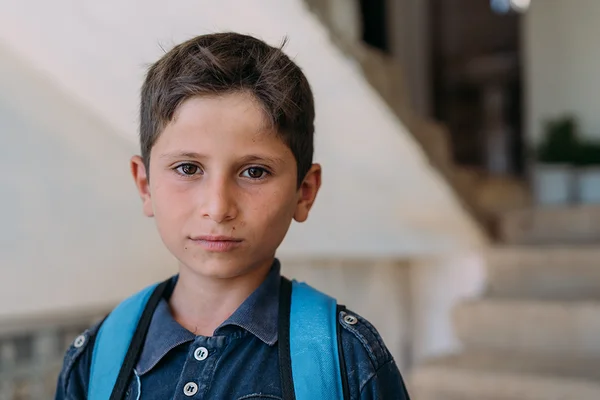
Mafraq, Jordan, 2023. When 14-year-old Ibrahim leaves home with his school backpack, his daily life appears ordinary at first glance. Yet his family’s story has been shaped by war, displacement and years of uncertainty.
More than ten years ago, his parents fled the Syrian region of Aleppo to Jordan. One of their twin daughters had been killed in a bombing. The family left everything behind and started a new life in Mafraq. The first years were difficult: they lived in a tent and often struggled to find enough food.
Despite the hardships, Ibrahim’s parents were determined to keep their children in school. But school supplies, clothes and backpacks were often beyond their means.
«I went to school without books and with worn-out shoes,» Ibrahim recalls. «I was ashamed of my situation and eventually stopped believing that I would ever finish school.»
A turning point came through UNICEF’s Hajati programme. The financial support helps vulnerable families buy school supplies, clothing and other essentials for their children.
Today, Ibrahim looks to the future with greater hope. «I no longer hate school. I now believe that education is my future and my way out of poverty.»
Yet the future remains uncertain. Due to declining international funding, education and support programmes for refugee families have already been reduced.
«My family depends on this support,» says Abdulaziz. «It scares me to think that my children may not have a chance for a better future.»