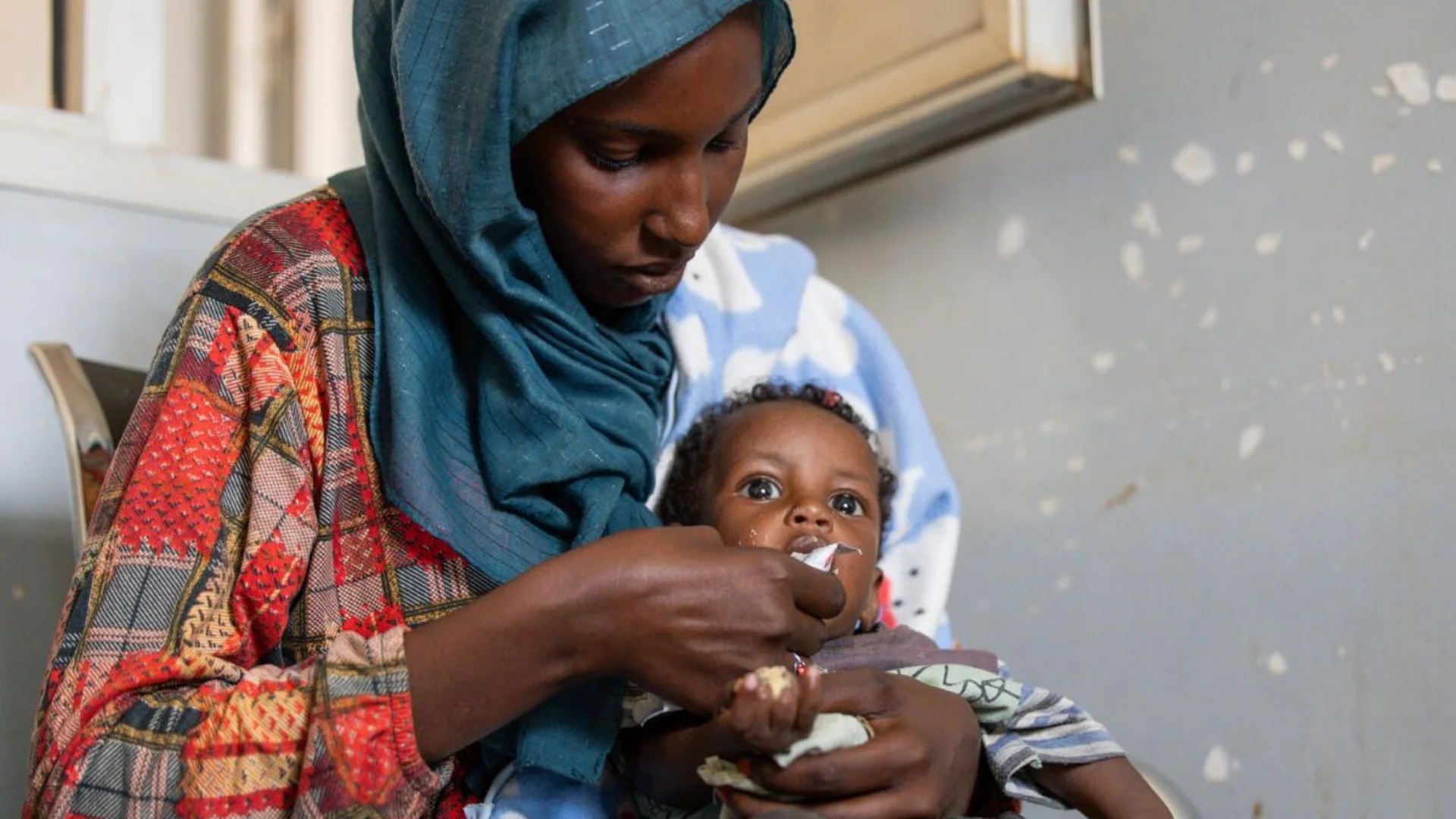
The situation
The war in Sudan has had far-reaching consequences. Children and families are being exposed to hunger, violence and displacement. More than 10 million people have been internally displaced. Many of them are seeking shelter in neighboring countries. More than 570,000 children have fled to Chad. However, the situation there is difficult: The country is poor. There is not enough to eat and often no safe water. That’s why it’s important that there is help both for refugee families from Sudan as well as people living in the host countries.
In such situations, children under five are especially vulnerable to developing malnutrition, which can stunt their development and cause life-long damage to their physical and mental health. According to the current UN report The State of Food Security and Nutrition in the World (SOFI), around 43 million of the world’s children under five are acutely malnourished and underweight. 150 million children under five are chronically malnourished, meaning that they are too small for their age.
Your help makes a difference
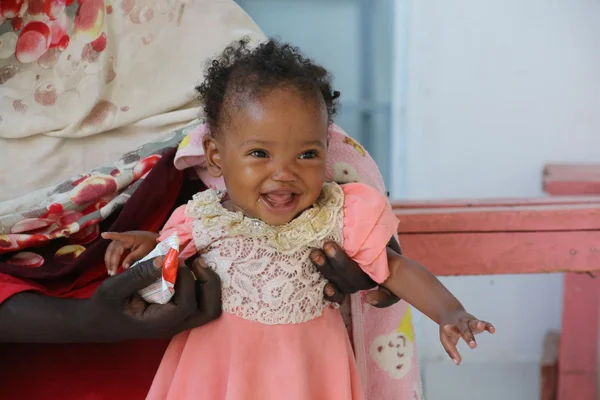
Genan was still a newborn when her mother died and she was taken in by her aunt, Rehab.
Her health deteriorated. Growing ever weaker, she was rushed to the hospital. Genan was diagnosed with severe acute malnutrition, a life-threatening condition.
A UNICEF-supported hospital in Damazine in Sudan treated Genan and provided her with life-saving special therapeutic foods.
After two months, Genan’s health status improved and her weight rose from 3 to 5.4 kilograms.
There are children like Genan all over the world, growing up in conflict zones where food supply chains are fragile and medical care difficult to access. UNICEF was able to help Genan on her path to recovery. However, many other children are still suffering from malnutrition and urgently need our help. The climate crisis is aggravating the situation even further. Harvests are being wiped out by droughts and floods. Economic shocks and inflation are making it difficult to buy food, with dramatic results. Around 55 million children worldwide currently suffer from acute malnutrition.
The global funding crisis also makes UNICEF’s work more difficult. Almost 28,000 UNICEF-supported outpatient centers for therapeutic treatment of malnutrition are at risk, and some have already had to shut their doors.
Help is urgently needed.
How your donation helps
Every child deserves a childhood without hunger. Thanks to your help, UNICEF can fight malnutrition around the world in the following ways:
- Therapeutic milk and special food to treat malnourished and undernourished children. Special therapeutic food is made for feeding even severely malnourished children in extremely emaciated states. It contains important vitamins and minerals.
- UNICEF provides health services and lifesaving medicines. In many countries, children cannot receive timely medical treatment, causing their conditions to deteriorate further. At the same time, malnutrition makes them more susceptible to diseases, causing a vicious cycle. The risk of children with severe acute malnutrition dying from a common infectious disease is up to eleven times higher than for healthy children.
- Care for pregnant and nursing women with micronutrients, deworming treatments, medical care, and foods enriched with vitamins and nutrients.
- Training for health workers and parents on early detection of health problems in children – using mid-upper arm circumference (MUAC) measuring tapes to identify malnutrition, for example.
- UNICEF works together with the governments of many countries to build social assistance systems for their poorest families. This includes cash transfers to help pay for essentials like food, water, clothing and health care.