Since the escalation at the beginning of March, around 820,000 people have already been displaced, including an estimate of around 290,000 children. Swiss national Andrea Berther, Deputy Representative of UNICEF Lebanon, explains how children are experiencing the crisis and what support they urgently need now.
What does the current crisis concretely mean for children in Lebanon?
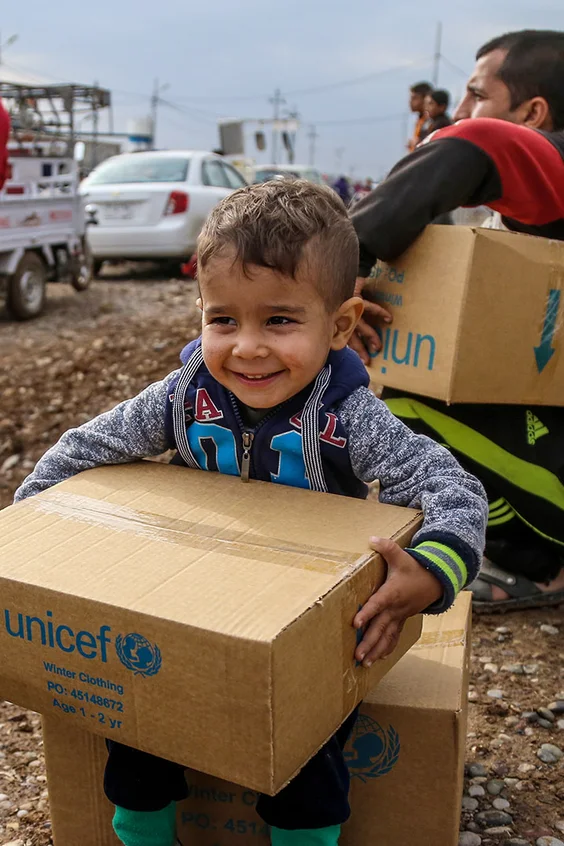
The ongoing escalation in Lebanon has devastating effects on children and is a cause for great concern. For many children, everyday life has completely changed. Families have had to leave their homes and are now living with relatives or in collective shelters, mostly public schools, where children should be learning rather than seeking refuge from violence. Often, children arrive at shelters completely exhausted and with little more than what they were able to carry while fleeing.
Some children are sleeping outdoors or in vehicles, often in unsafe conditions and in cold temperatures at night.
For months, they have been confronted with violence and insecurity. They hear explosions, see armed vehicles or witness their parents struggling for safety and income. This situation places a heavy burden on them, especially when it continues over a long period of time. This ongoing strain can strongly undermine children’s sense of stability in daily life and shape their outlook on the future. Without timely support, traumatic stress can have long-term consequences for their mental health.
What impact does the crisis have on children’s education and development?
The closure of all schools has interrupted the education of more than one million children. School is not only a place for learning, but also a space that provides stability, social contact and protection. When these structures disappear, this too can have long-term consequences for children’s development.
The psychological strain on children is therefore considerable. Many show signs of stress, anxiety or sleep problems. Psychosocial support is therefore a central component of the humanitarian response.
What support do children and their families currently need most urgently?
For many displaced families, the most immediate needs are basic necessities: clean water, functioning sanitation facilities, mattresses and blankets, and sufficient food for children. Diesel for generators is also important so that shelters, water pumps and medical facilities can operate at all.
The situation in the often overcrowded shelters is difficult for many families. For adolescents and young women in particular, it is challenging to maintain privacy and adequate hygiene conditions. At the same time, many children need medical care, psychosocial support and opportunities to continue learning. Their protection from violence, exploitation and the effects of traumatic experiences is equally important.
How is UNICEF supporting children and families under these conditions?
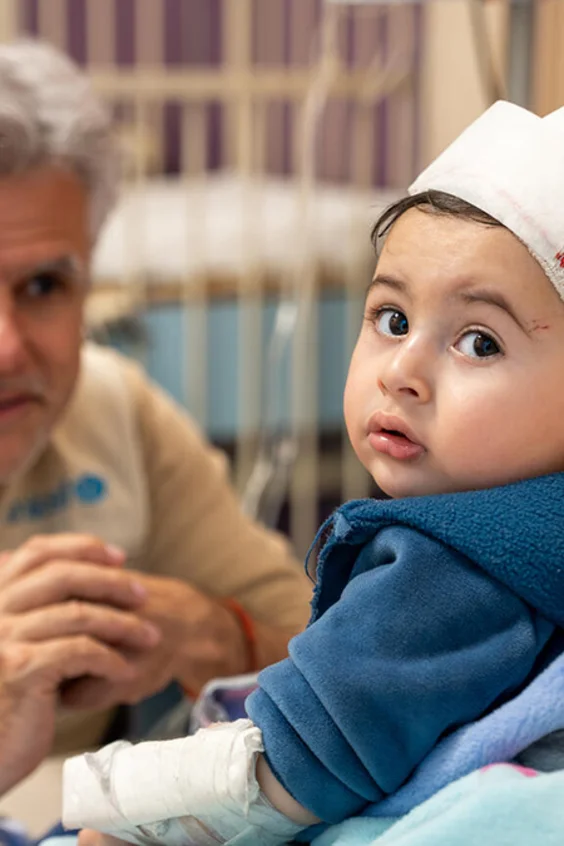
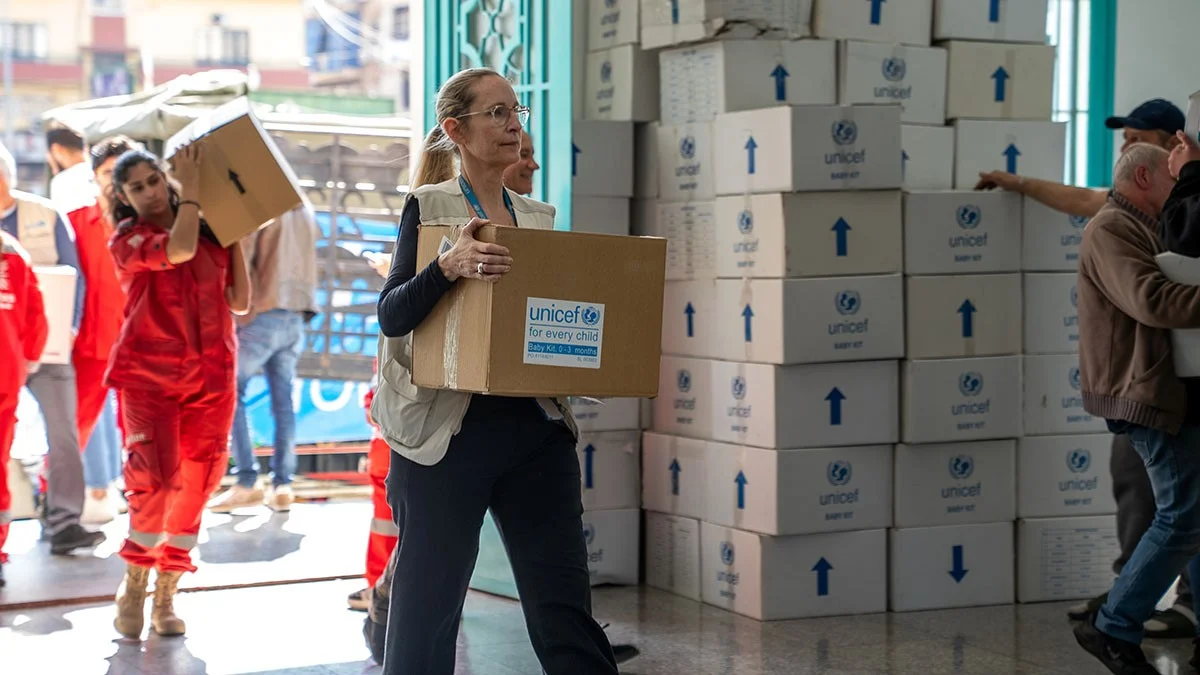
UNICEF has significantly expanded its emergency response. Teams support families in collective shelters, distribute relief items, provide psychosocial support to children and help ensure access to education. Health care is also a key priority. Mobile health units provide medical consultations and vaccinations for displaced families. UNICEF also supports hospitals so that particularly vulnerable children – including newborns – can continue to receive intensive medical care. At the same time, nutrition programmes are being prepared, and child protection teams identify and support injured, unaccompanied or separated children.
Where do the biggest challenges currently lie?
The situation is changing very rapidly. More and more families are being forced to leave their homes, while access to affected areas is becoming increasingly difficult.
At the same time, humanitarian needs far exceed the resources currently available. Despite support that has already been received, there is currently a funding gap of 91 per cent. This gap significantly limits the ability to scale up life-saving assistance at the required pace. Additional international support is needed to effectively protect children and maintain essential services.
Is there a particular encounter with a child that you remember?
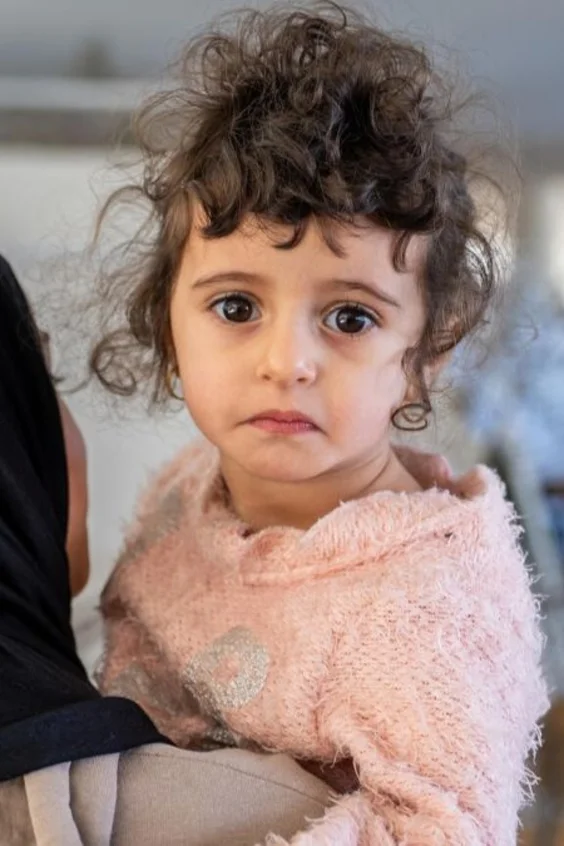
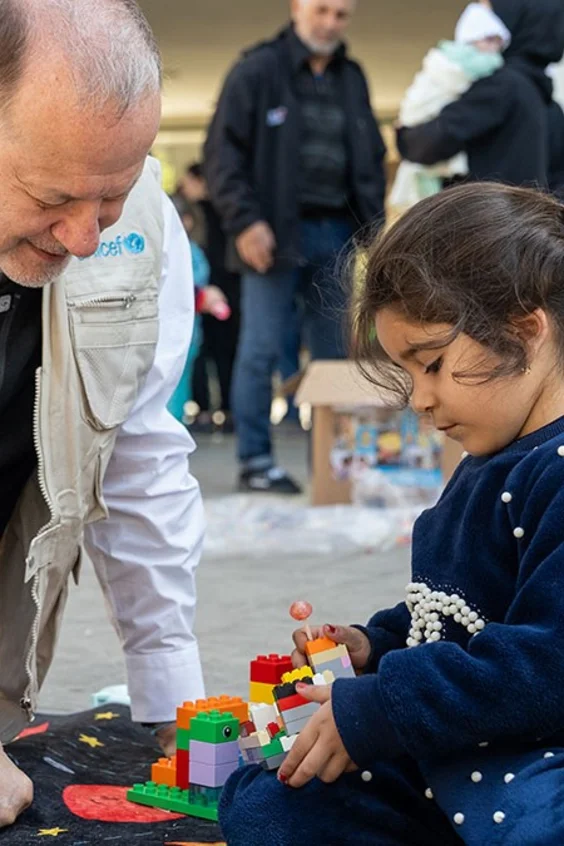
On the first day of my visit to a collective shelter, I met a young girl who deeply moved me. She quietly told me that she had already been displaced once before, in 2024, and that this was now the second time. Holding the few belongings her family had been able to carry, she looked around the crowded room and then asked me, “Will you come again this time to play with us?”
This question was more than a simple request. It reflects what children truly need in times of crisis: normality, joy and care. Despite everything she has been through, she is still seeking connection and moments to simply be a child. Her hope is a powerful reminder of how important it is to create safe spaces, provide psychosocial support and help children regain a sense of everyday life.
What is at stake for children in Lebanon?
If the crisis continues, long-term consequences threaten an entire generation. Interrupted education, prolonged stress and displacement can severely affect the future prospects of many children. This makes it all the more important that children receive protection, stability and concrete support now.