More than 25 000 female teachers and health workers could be lost by 2030
Afghanistan risks losing up to 20 000 women teachers and 5 400 healthcare workers by 2030 as restrictions on girls’ education and women’s employment persist, according to a new UNICEF analysis.
The report «The Cost of Inaction on Girls’ Education and Women’s Labour Force Participation in Afghanistan» shows that the share of women in the civil service declined from 21 percent to 17,7 percent between 2023 and 2025. The decreasing number of trained female professionals in schools and health facilities is expected to significantly impact children’s learning, health outcomes and future opportunities.
Restrictions on girls’ and women’s access to education and employment are already costing the country around US$ 84 million annually in lost economic output. These losses are expected to increase as long as access to education and work remains restricted.
The report also highlights that excluding women from education and healthcare services directly affects children. It leads to fewer girls attending school and reduced access to care for women and children. The impact is particularly severe in healthcare, where social norms often prevent women from seeking treatment from male providers. As a result, the decline in female health workers directly limits services for mothers, newborns and children.
«Afghanistan cannot afford to lose future teachers, nurses, doctors, midwives and social workers who sustain essential services», said Catherine Russell, UNICEF Executive Director. «This will be the reality if girls continue to be excluded from education. We urge the de facto authorities to lift the ban on secondary education for girls and call on the international community to remain committed to supporting girls’ right to learn.»
Afghanistan faces a dual challenge: losing trained female professionals while preventing the next generation from replacing them. As experienced women retire or leave the country, girls are denied access to further education and cannot take on these roles. Each year of delay costs Afghanistan another generation of skilled professionals.
Since girls were banned from secondary education in September 2021, more than one million girls have been denied their right to learn. The analysis shows that if the ban continues until 2030, more than two million girls will be affected. The education system is already impacted. The number of female teachers in basic education has declined by more than nine percent, from nearly 73 000 in 2022 to around 66 000 in 2024.
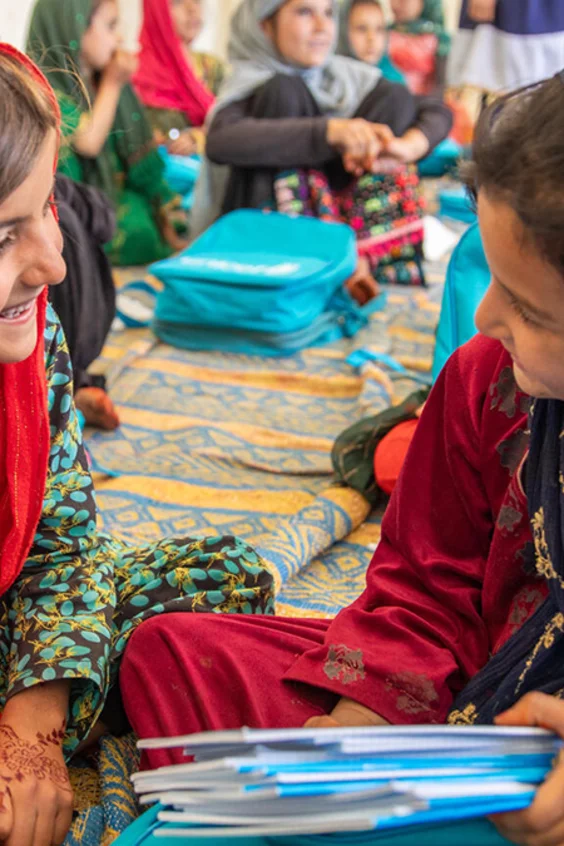
Despite these restrictions, UNICEF continues to support children’s education in Afghanistan. In 2025, more than 3,7 million children in public schools received support. 442 000 children, 66 percent of them girls, participated in community-based learning programmes. In addition, 232 schools were built or rehabilitated.
As more girls lose access to education, UNICEF calls for urgent action to restore girls’ rights to secondary and higher education, while maintaining investment in primary education as a key driver of human capital development.
«Denying girls access to secondary education robs an entire nation of its potential», said Russell. «It reinforces poverty, weakens health outcomes and undermines the economic progress that an educated generation of women could achieve.»