«UNICEF is deeply concerned by confirmed Ebola outbreaks in the Democratic Republic of the Congo (DRC) and Uganda, and by the growing risk to children and vulnerable communities across the region – a situation that the World Health Organization has now declared a Public Health Emergency of International Concern.
A total of 246 suspected cases have so far been reported, including 80 suspected deaths in Ituri Province in eastern DRC. Uganda has also reported two cases, including one death.
These figures underline the urgent need to support governments as they lead rapid outbreak response measures to contain further spread through community engagement, coordination with relevant stakeholders and strengthened cross-border cooperation.
This strain of the Ebola virus – the Bundibugyo strain – is less common than the Zaire strain. There is currently no approved vaccine or treatment available. It is believed that circulation of this strain may have started in late April.
The volatile security situation, ongoing access constraints and high population mobility are increasing the risk of rapid transmission across affected and neighbouring areas.
Children are particularly vulnerable to the consequences of Ebola outbreaks, including disruptions to essential services, the loss of parents and caregivers, stigma, psychosocial distress and increased protection risks.
UNICEF has already mobilised nearly 50 tonnes of infection prevention and control supplies to Bunia, including disinfectants, soap, personal protective equipment, water purification tablets and water tanks.
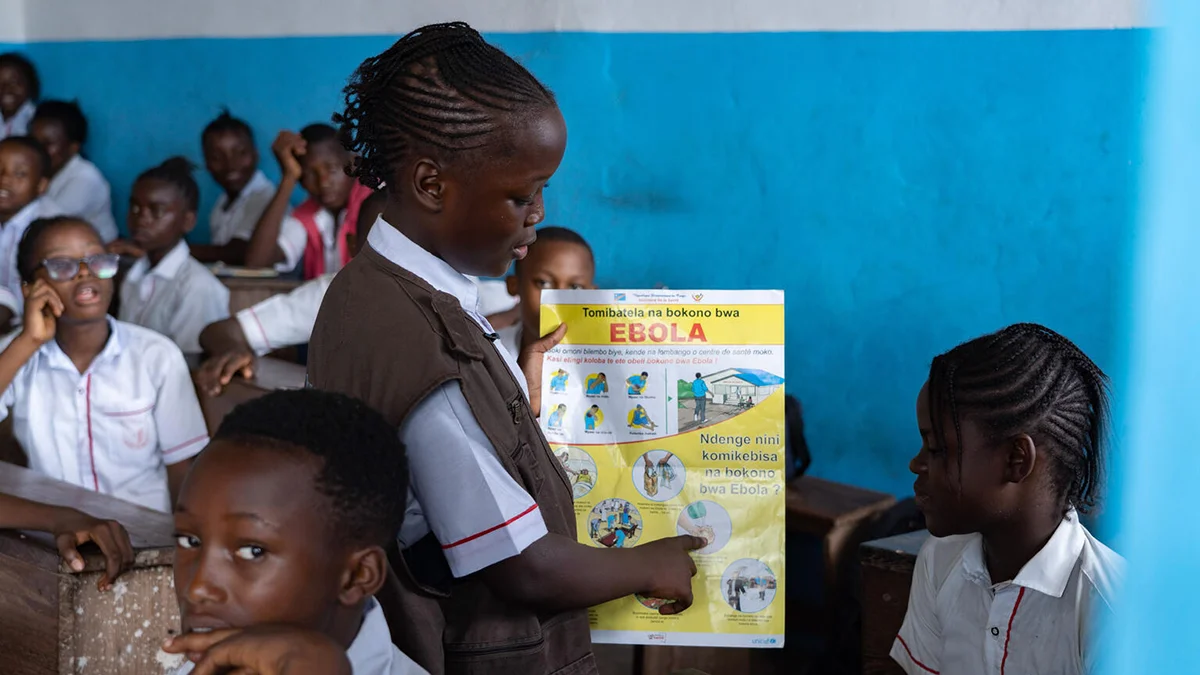
A multidisciplinary emergency rapid response team is also expected to arrive shortly to provide technical assistance in priority areas, including support for risk communication and community engagement activities aimed at helping families understand how Ebola spreads and how to reduce the risk of infection.
More than 2 000 community health workers are already in place. However, additional capacity and resources are urgently needed to ensure effective coverage, particularly in hard-to-reach areas.
In response to the outbreak, UNICEF has activated its highest emergency classification – a Level 3 Corporate Emergency – to support an organisation-wide scale-up of preparedness and response efforts across affected and at-risk areas.
This activation enables the immediate allocation of flexible funding, the accelerated deployment of emergency personnel, simplified operational procedures for country offices and enhanced coordination across regional and headquarters levels to support children and families affected by the outbreak.
UNICEF is working closely with partners, including the World Health Organization and Africa CDC, in support of government-led response efforts.
«Every Ebola outbreak places children at risk – not only from the virus itself, but also from the wider disruption to health, nutrition, education and protection systems.
UNICEF is calling for immediate, safe and sustained humanitarian access to affected communities, particularly in eastern DRC, to ensure that vulnerable children and families can be reached with life-saving support.
Rapid action, trusted community engagement and sustained support for frontline responders and community health workers – who themselves face significant risks – will be critical to protecting children and preventing further spread.»