Contents of this page:
The situation
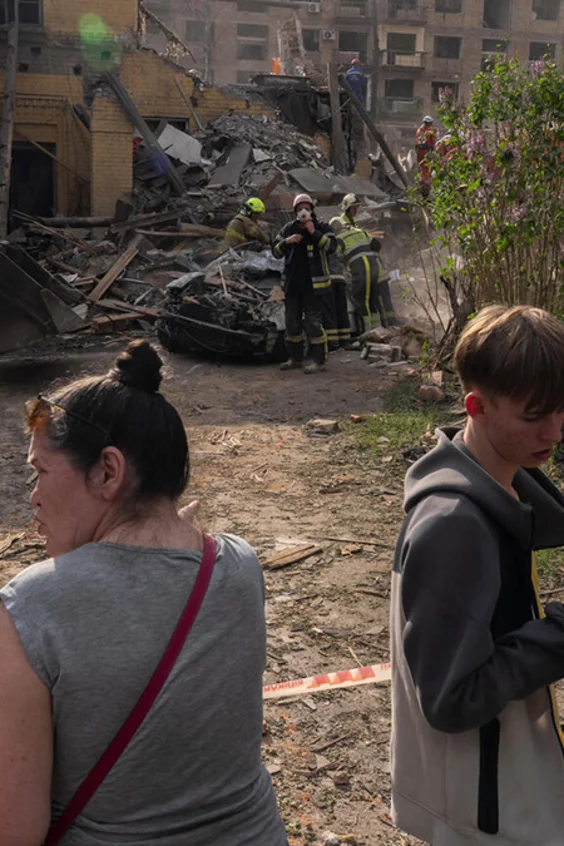
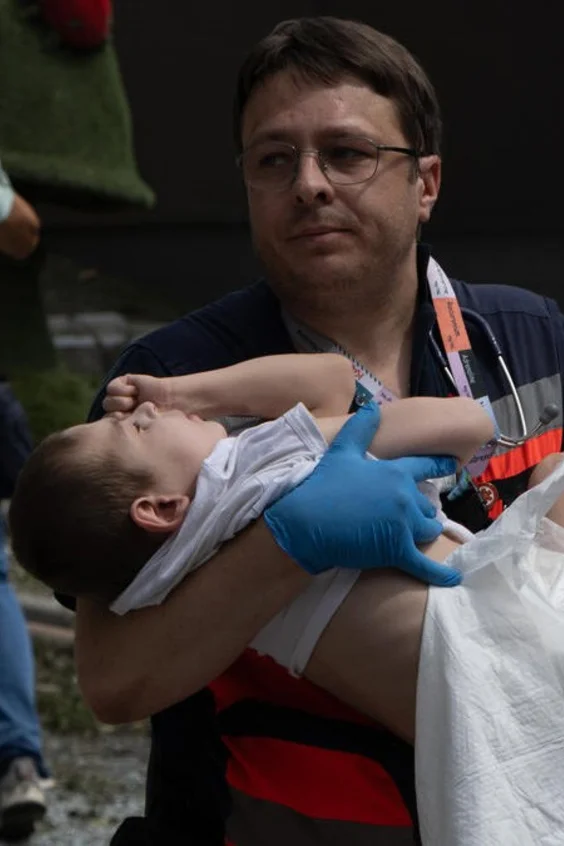
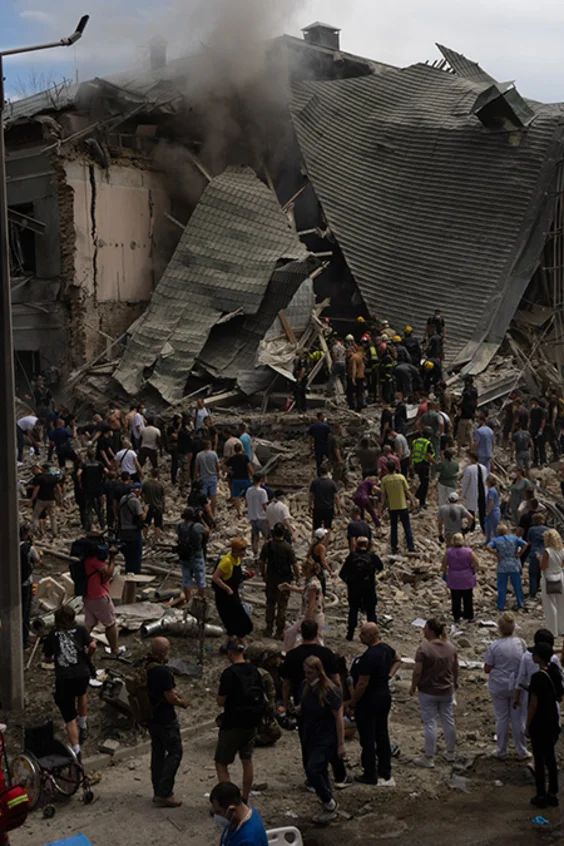
The conflict in Ukraine is now entering its fifth year and is claiming more human lives every day – including those of innocent civilians, with many children among them. Nearly 13 million people in Ukraine are dependent on humanitarian aid. Millions of people have lost their livelihoods. Access to vital services such as a water supply, heating and health care is severely restricted. The bombardment continues in many areas and is damaging countless homes and key institutions. The consequences for the population are devastating.
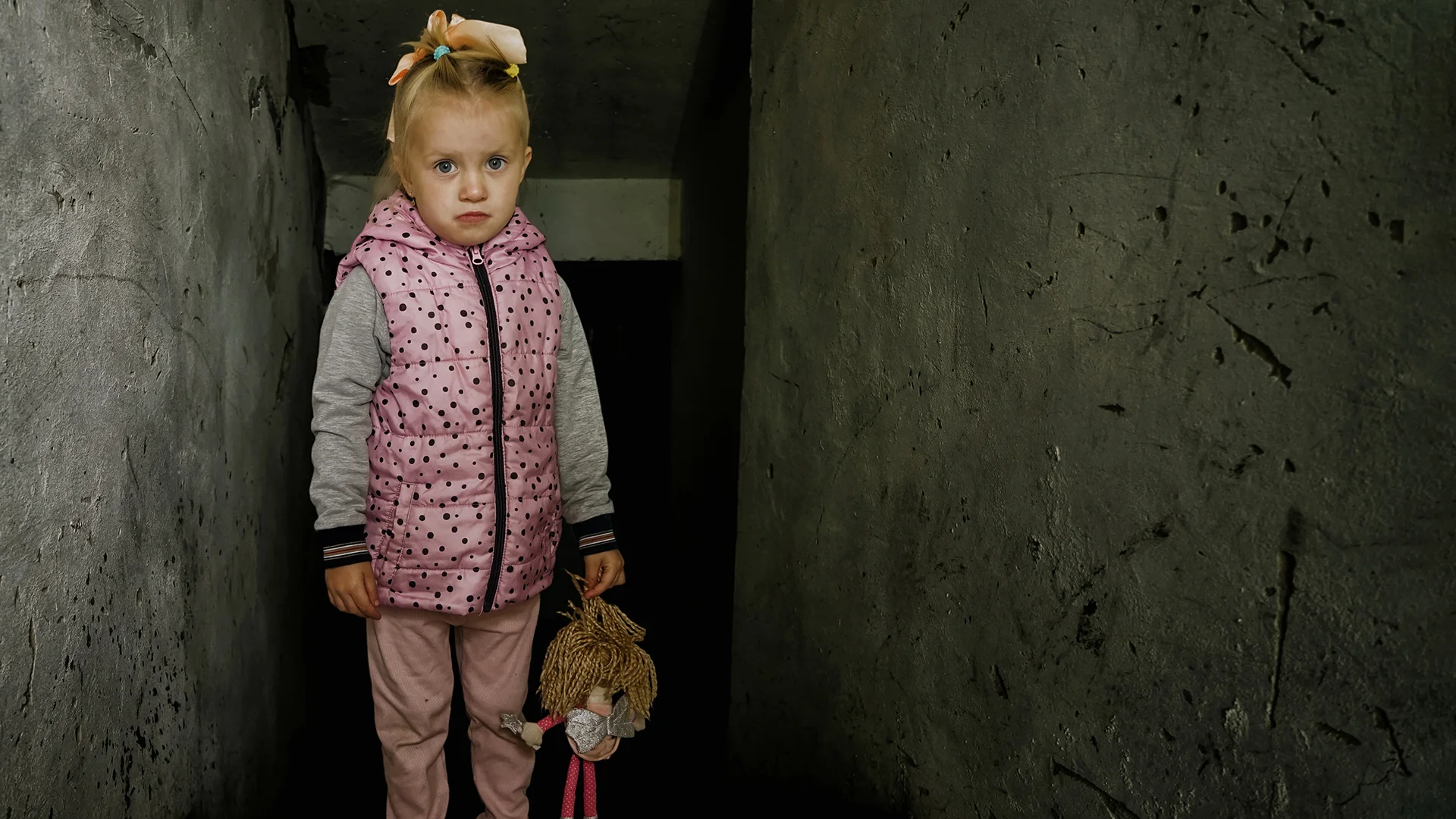
The outbreak of war in February 2022 sparked off the biggest refugee crisis since the Second World War. In the first year of the war in particular, millions of people had to flee their homes and seek refuge within Ukraine or in neighboring countries. Even today, around six million refugees from Ukraine are registered in Europe. Most of them are women and children. War experiences and dislocation can be seriously traumatic, particularly for children.
I can’t see my future because I don’t know if I’ll wake up tomorrow. I hope the war will stop and my father will return home.
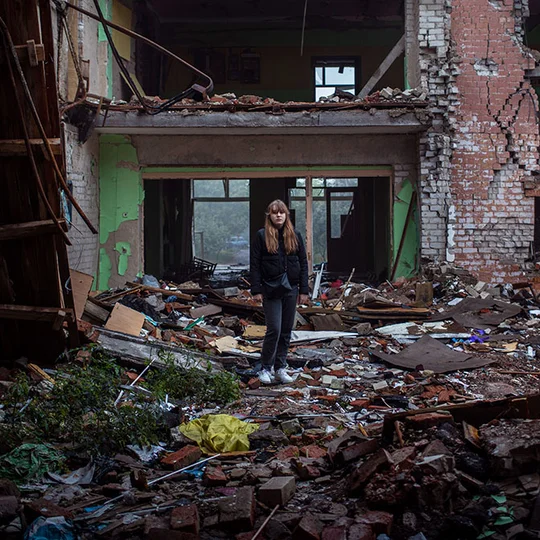
The armed conflict in Ukraine has dragged on for three years and is claiming more human lives every day – including those of innocent civilians, with many children among them. Over 14 million people – around 40 percent of the population – are now dependent on humanitarian aid. Millions of people have lost their livelihoods. Access to vital services such as a water supply, heating and health care is severely restricted. The bombardment continues in many areas and is damaging countless homes and key institutions. The consequences for the population are devastating.
The outbreak of war in February 2022 sparked off the biggest refugee crisis since the Second World War. In the first year of the war in particular, millions of people had to flee their homes and seek refuge within Ukraine or in neighboring countries. Even today, around six million refugees from Ukraine are registered in Europe. Most of them are women and children. War experiences and dislocation can be seriously traumatic, particularly for children.
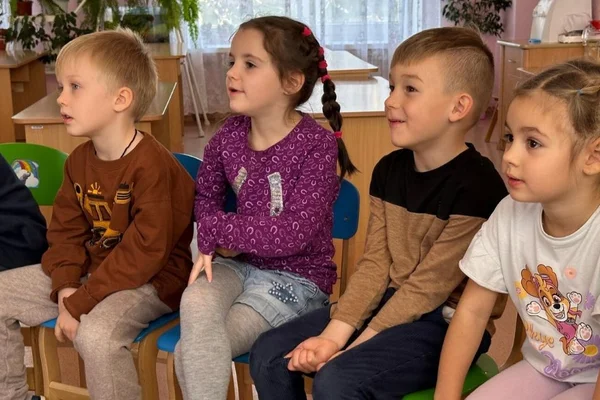
The city of Pivdenne, Odesa region, has only one heating facility. It supplies heat to five kindergartens, four schools and an outpatient clinic as well as to around 32,000 local inhabitants. The building which houses the boilers was severely damaged by a drone attack and had to be closed due to rain and moisture coming in through broken windows.
For three days, this kindergarten had no power and no functioning heating, which resulted in cold, damp rooms. Young children need to be warm and safe in the winter and cold, wet conditions can quickly make them ill.
With support from the European Union, UNICEF was able to help repair the facility after the attack and today, the kindergarten is once again a warm, safe and child-friendly space.
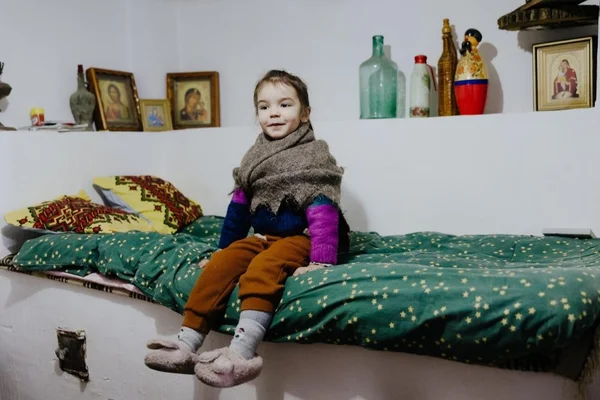
Four-year-old Alika lives in the Kiev region of Ukraine. She and her family are currently riding out the winter away from the city. Their house in the country has only one source of heat – a wood-burning stove. They have neither electricity nor central heating.
In late 2025, Alika was very ill with acute viral respiratory infections and had to be hospitalized. Alika’s parents felt that they needed to leave the city after another massive missile attack on Kiev took out the city’s electricity, water and heating systems. They took their daughter to live with friends in the country, where at least a wood-burning stove could provide a minimum of warmth. The icy winter poses a serious threat to the health of children like Alika.
UNICEF supports families in Ukraine with targeted emergency assistance during the winter months. This includes access to heat, medical care and other essential services to protect children from the devastating consequences of war during winter.
How your donation helps
UNICEF is in action not only in Ukraine, but also along the escape routes in neighboring countries.
Together with local partners...
- we provide urgently needed emergency supplies;
- we support households with cash assistance;
- we give children and families access to safe water, hygiene products and sanitation;
- we reach millions of people in the country thanks to mobile medical teams, and can give them access to medical services;
- we look after girls and boys traumatized by the war, alongside psychosocial care teams;
- we ensure that children have access to education.
During the cold winter months, UNICEF provides additional support to the population with cash assistance and winter kits containing warm clothing and blankets. In the winter season of 2024/25, we carried out repair and maintenance work on heating systems in 19 communities, benefiting 1.5 million people in Ukraine. Furthermore, we ensured that water and sanitation facilities as well as healthcare facilities remained operational despite power outages.
I’ve lost a lot of friends, and it’s very stressful. My friends have had to mature. Everyone I speak with is more serious about life.
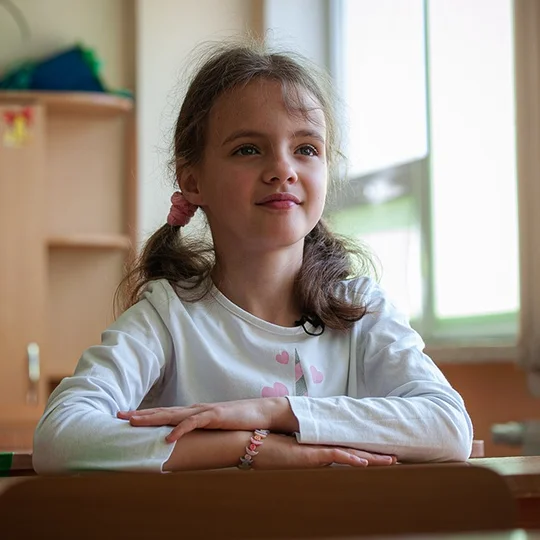
UNICEF has been working in Ukraine and neighboring countries since the outbreak of the war to provide refugee families with basic necessities. We have set up contact points for refugee children and their families along the escape routes in the border areas of several countries, such as the Republic of Moldova and Romania.
At the contact points, also known as Blue Dots, UNICEF is creating child-friendly spaces where girls and boys can relax and play. Trained staff help children come to terms with their experiences and also look after refugees who are unaccompanied minors. Mothers of small children can retreat to protected rooms, for example to breastfeed and change diapers. Parents can obtain information about other support services at the Blue Dots. Families can also obtain relief supplies such as hygiene items and blankets.