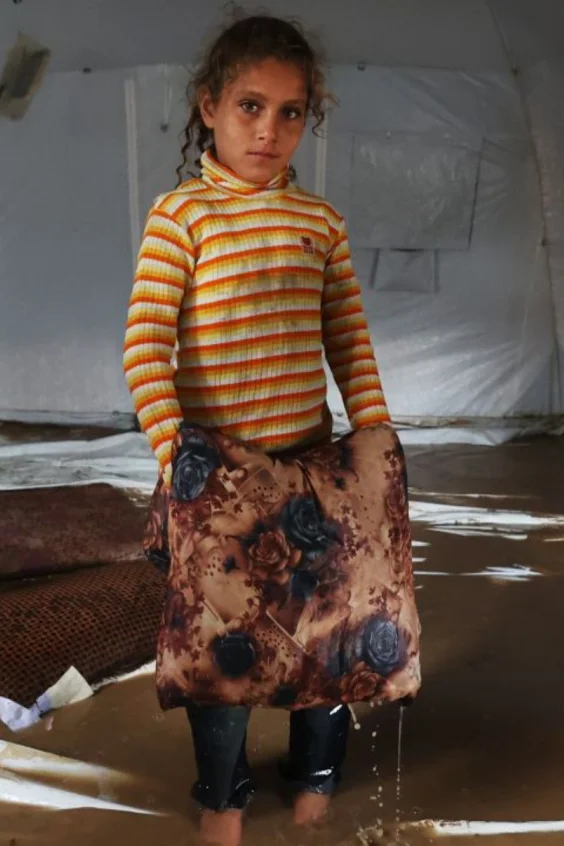
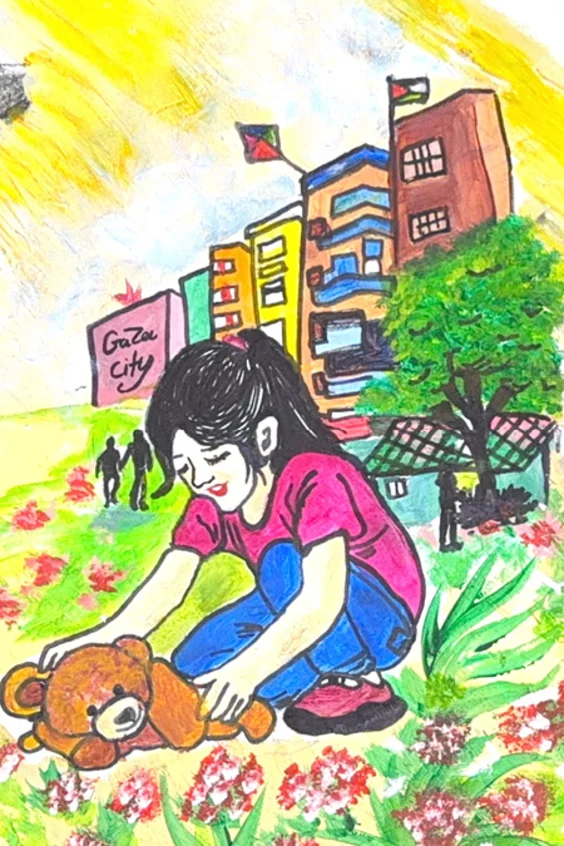
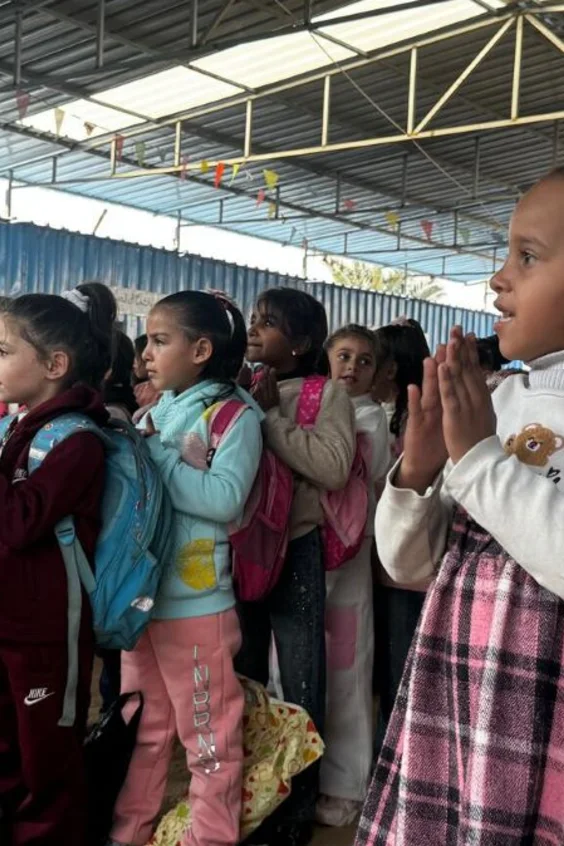
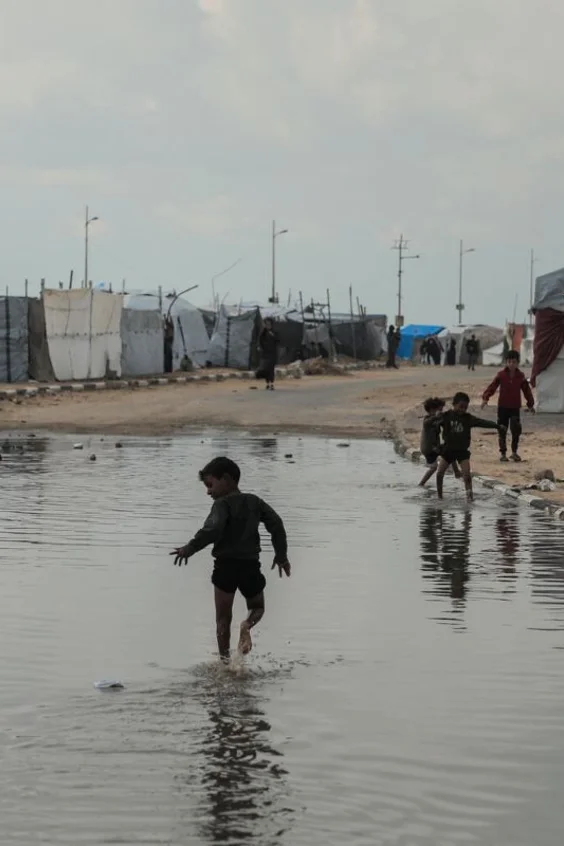
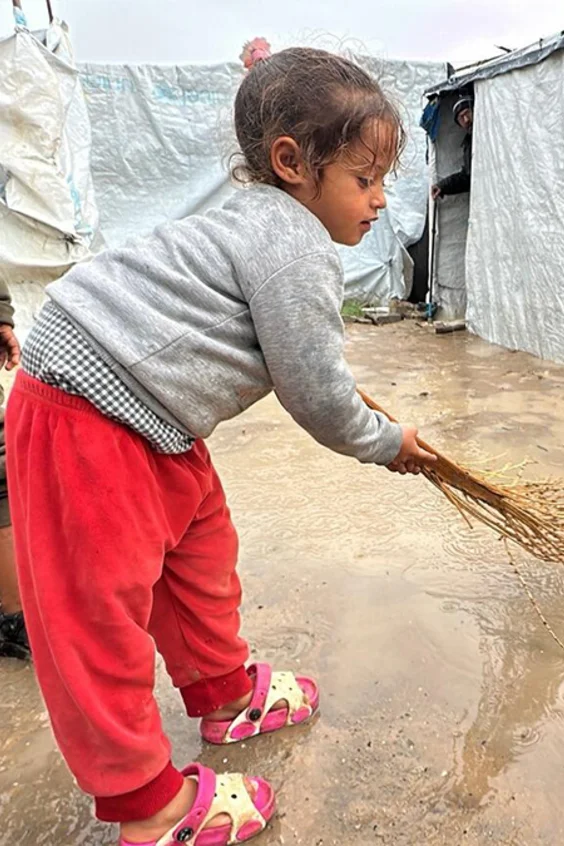
Three children aged four, five and eight were killed along with their mother over the weekend when a sand dune collapsed onto their tent in Deir al-Balah, central Gaza, following heavy rainfall. Nearly one million displaced people live in flood-exposed areas, including 400 000 at extremely high risk, almost half of them children.
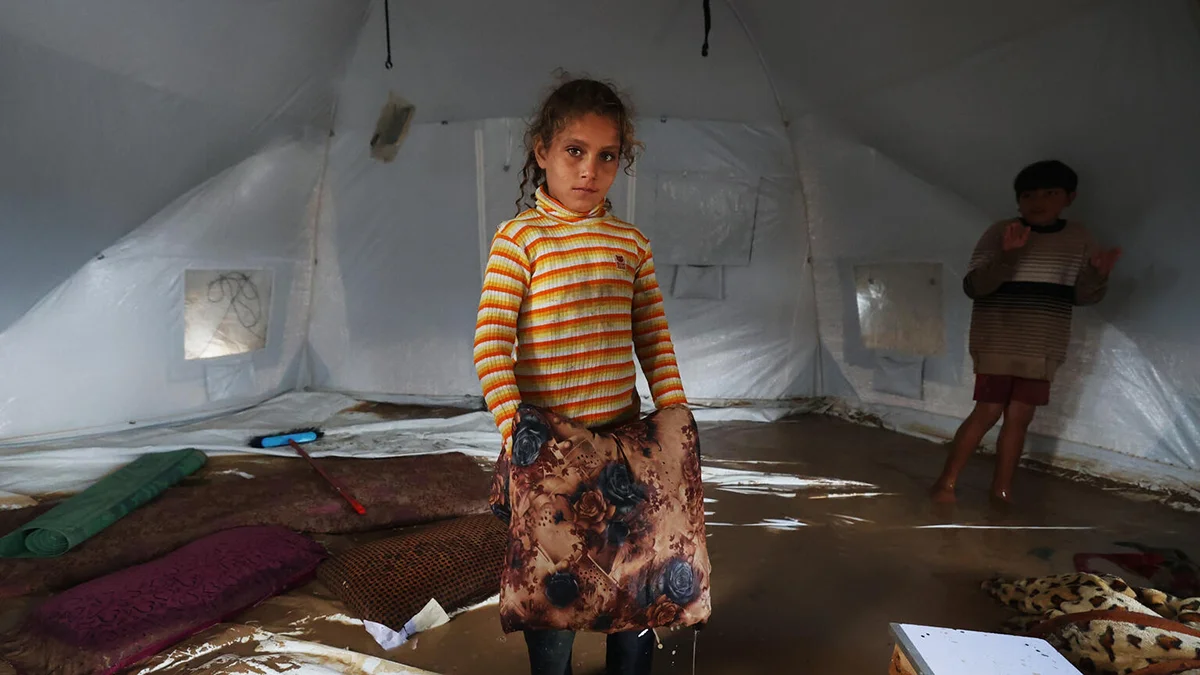
The heavy rains directly affected more than 106 000 people, damaging or destroying shelters, latrines and personal belongings. An estimated 950 000 displaced people live in flood-exposed areas, including 400 000 people, almost half of whom are children, in locations at extremely high risk.
«These children and their mother were killed because they had nowhere safe to sleep. That is the reality in Gaza today», said UNICEF Executive Director Catherine Russell. «Families are living without the most basic conditions for their safety, health and dignity. More children could die without proper shelter, working water and sanitation systems, and the equipment needed to restore essential services. The worst of winter is yet to come.»
Families face another winter in dire conditions
The deaths occurred as families, exhausted by war and the prolonged crisis, prepare to face a fourth winter under extremely difficult conditions. Some 1.7 million displaced people are still living in tents, makeshift shelters or damaged buildings exposed to flooding, cold and the risk of collapse.
Flooding caused by the heavy rains is also worsening the sanitation crisis created by the war. No wastewater treatment plant in Gaza is currently operational.
In Gaza City, rainwater mixed with sewage is threatening to overflow from the Sheikh Radwan stormwater basin, where only two of the six pumps are still functioning. UNICEF has been seeking approval from the Israeli authorities for more than a year to bring in the equipment needed to repair the facility.
Meanwhile, the cold poses another deadly threat, particularly to newborns. Last winter, 11 children were reported to have died of hypothermia. Without adequate protection, worsening conditions could put more children's lives at risk as winter sets in.
UNICEF provides life-saving winter assistance
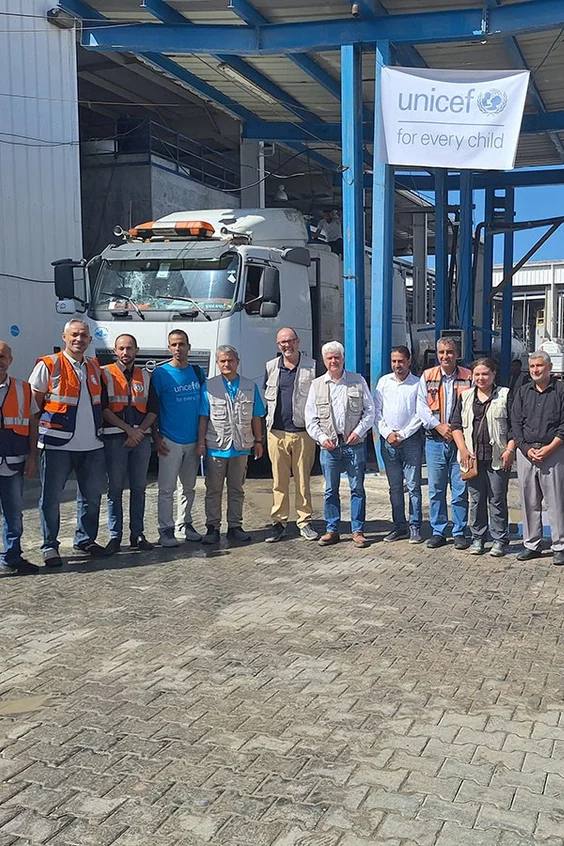
UNICEF and its partners are distributing tarpaulins, winter clothing, blankets and hygiene supplies, clearing blocked sewers and stormwater basins, and installing sandbags at various locations to reduce the impact of flooding.
In the past week alone, UNICEF reached at least 10 000 children with winter clothing and thermal blankets, distributed tarpaulins to families whose tents had flooded, and cleared sewage and stormwater at more than 50 locations.
The emergency response is vital but does not offer a long-term solution. Tents and tarpaulins provide little protection against severe storms, while damaged water and sanitation systems continue to threaten children's health and lives.
UNICEF calls for access to life-saving supplies
UNICEF urgently calls on the Israeli authorities to allow the immediate entry of pumps, generators, spare parts and other materials needed to repair water and sanitation infrastructure, including the Sheikh Radwan stormwater basin and the Sheikh Ejleen Wastewater Treatment Plant.
UNICEF urges the international community to join the call for the entry of all life-saving humanitarian supplies and equipment, and to provide urgent funding for UNICEF's US$97.5 million winter response in Gaza.